ATS Restoration Team Old Bridge Old Bridge Township
📞 848-337-3659
Old Bridge Township • NJ

Mold Remediation in Old Bridge Township.

IICRC S520 mold remediation in Old Bridge Township — full containment, HEPA filtration, source removal, and post-clearance verification.

Local team in Old Bridge Township Honest, transparent pricing 24/7 emergency line
NJ-Local Crew dispatched from Old Bridge Township
Documented Daily moisture logs + Xactimate scopes
Single Source Mitigation through reconstruction
Service Overview

How We Approach It

Mold remediation is what happens when a water event was not properly dried, or when a chronic moisture problem was ignored long enough for fungal growth to establish. We follow the IICRC S520 standard for safe, effective mold removal in Old Bridge Township properties.

What's Included

  • IICRC S520 protocol
  • Negative-air containment
  • HEPA filtration
  • Source removal to documented line
  • Antimicrobial application
  • Optional 3rd-party clearance testing

Iicrc S520 Protocol — What Proper Mold Remediation Looks Like

The IICRC S520 standard defines the protocol for safe, effective mold remediation. It is not legally required in NJ but it is what good restorers follow because it is the only approach that actually works long-term. The shortcut versions (spray bleach on it, paint over it, fog with antimicrobial, leave the source moisture in place) all fail within months.

The protocol has five phases: assessment (where is the mold, how extensive, what species, source moisture identified and stopped), containment (negative-air pressure differential between affected and unaffected spaces, plastic sheeting, HEPA-filtered air scrubbers running continuously), source removal (porous materials with growth get removed and bagged for disposal — drywall to documented flood line, insulation, untreated wood), HEPA cleaning (all hard surfaces in the containment), and verification (visual inspection + optional third-party air sampling to confirm the contamination has been removed).

Reconstruction only starts AFTER verification clears. New material does not go up against contaminated substrate. Skipping verification is how you end up with mold returning behind a freshly-painted wall.

Source Moisture: the Step Most Cleanups Skip

Mold needs three things to grow: moisture, organic material, and time. Organic material is everywhere in a building (drywall, wood, dust). Time is unavoidable. The only variable a remediator controls is moisture. If the source moisture is not eliminated, the mold returns regardless of how thoroughly the cleanup was performed.

Common moisture sources in Old Bridge Township properties: roof leaks (intermittent — only during rain events, easy to miss), plumbing leaks (slow drips behind walls, often discovered only when staining or odor appears), foundation seepage (basement water during heavy rain), HVAC condensate failures (drain pan overflow, frozen evaporator coil melt), inadequate bathroom ventilation (chronic high humidity in poorly-vented bathrooms), and ground-water infiltration in below-grade spaces.

Our scope-of-work for any mold remediation includes a source-moisture investigation as phase one. If the source is a plumbing leak, we coordinate with a plumber to repair before remediation. If it is a roof leak, the roof gets repaired first. If it is HVAC, the HVAC tech gets involved. Skipping this step guarantees the mold returns. We do not skip it.

Process

Our Process

  1. 01

    You Call

    A real person answers 24/7. We get the address, the situation, what equipment to load. Two minutes max on the call.

  2. 02

    We Roll

    Truck heads out within minutes for active losses. Standard target is on-site within 60 minutes anywhere in our Old Bridge Township footprint.

  3. 03

    Stop the Damage

    Water out, contaminated material removed, drying gear deployed, affected areas sealed off. The first 24 hours decide whether the loss stays small.

  4. 04

    Dry It Right

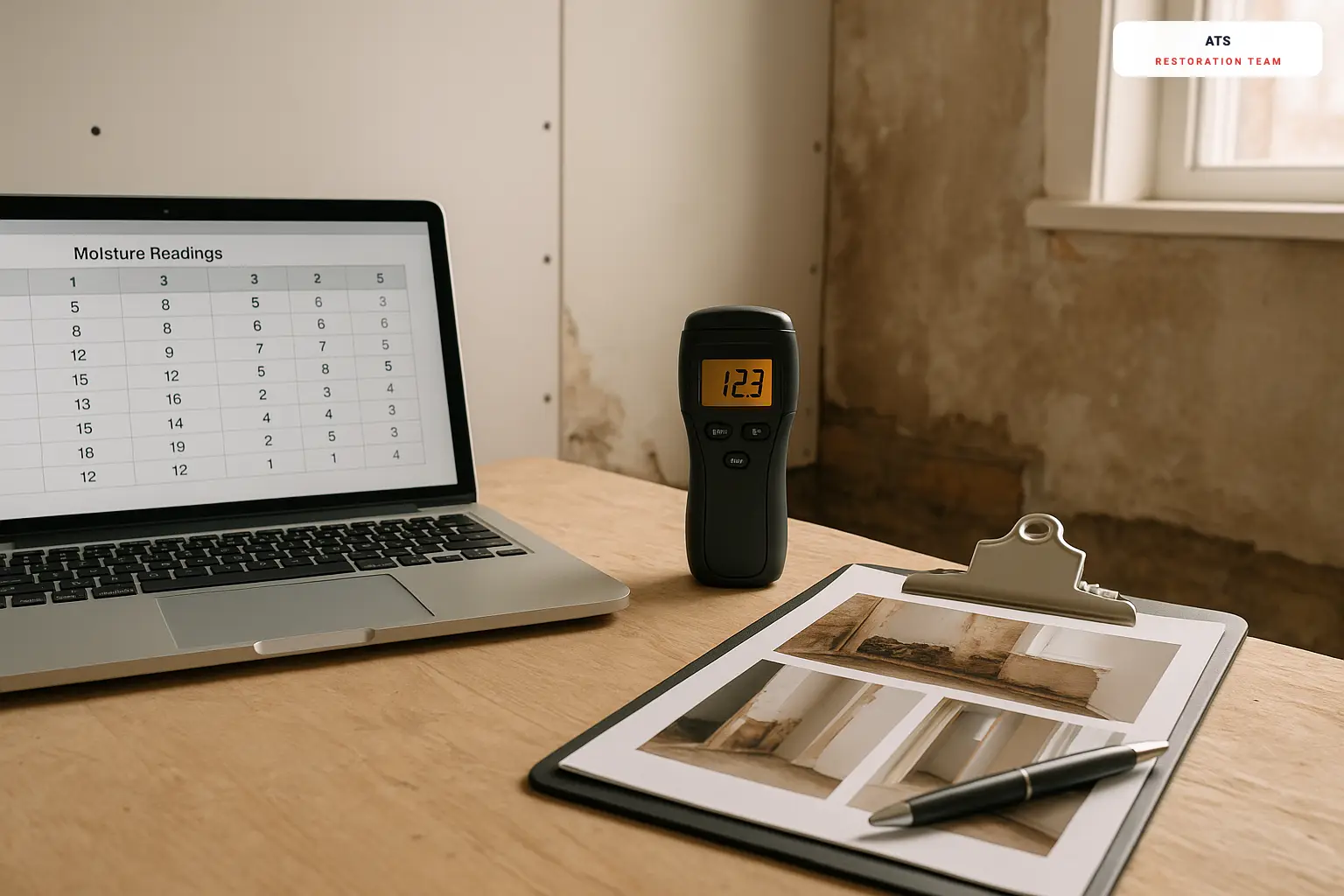
    Air movers + dehumidifiers run for 3-5 days. We log moisture readings daily, reposition equipment until every wet substrate hits the dry standard.

  5. 05

    Put It Back

    Same crew that pulled out the wet drywall puts the new drywall back. One contract from first call to final walk-through.

The difference

Why Customers Choose Us

Real reasons. No invented stats, no manufactured awards.

  • 01

    IICRC Standards, No Shortcuts

    S500 for water, S520 for mold, S700 for fire. We follow the protocols because they are the only approaches that produce work that holds up. Adjusters approve our scopes; insurance closes our claims.

  • 02

    Fast Where It Matters

    Sub-60-minute response to active losses across Middlesex County. Pre-staged equipment for known surge periods. The first hour is what determines the eventual claim size — we get there fast and we are equipped on arrival.

  • 03

    Honest Cause-Of-Loss Documentation

    Sudden vs gradual, wind vs flood, supply line vs sewer — the framing determines coverage. We document accurately so the right policy pays the right portion. No inflating, no understating.

Service Area

Serving Middlesex County

Restoration coverage from Old Bridge Township, NJ across the full Middlesex County footprint. Active emergencies dispatch within the hour. Non-emergency consultations and reconstruction work scheduled at the property owner's convenience. We work both single-family residential and small commercial in the corridor.

Counties Covered

  • Middlesex County, NJ

Cities We Service

Each Middlesex city below opens a local page with arrival times from our Old Bridge Township base and the loss patterns we handle most often in that municipality.

Not sure if you're in our area? Call 848-337-3659 and we'll tell you in 30 seconds.
FAQ

Frequently Asked Questions

If you don't see your question, just call or message us.

Will my floors and walls have to come out? +

Often less than people expect. Category-1 (clean supply-line) water that we reach inside 24-48 hours can usually be dried in place. Category-3 (sewage, river, ground intrusion) is different — IICRC S500 protocol requires removing porous materials those waters contacted. We cut to a documented flood line and replace what comes out.

How do you make sure mold does not come back? +

Mold prevention happens during drying, not after. We hold the structure under controlled airflow until moisture meters confirm wood, drywall, and substrate are back inside the manufacturer-approved dry range. Anything porous that absorbed contaminated water comes out. Surfaces receive a registered antimicrobial before reconstruction. We also pull access panels and inspect HVAC ductwork if water tracked into the system.

Are you open weekends and holidays? +

Emergency dispatch is 24/7/365 including all holidays. Reconstruction work and consultations follow business hours but we can adjust for client schedules.

What is the difference between water damage and flood damage? +

Water damage is sudden and accidental — pipe burst, appliance failure, storm intrusion through a damaged roof. Flood damage is rising surface water from outside the structure. Standard homeowners insurance covers water damage. Flood requires separate NFIP flood insurance. We document the source clearly so the right policy pays the claim.

How much does water damage restoration cost? +

A typical Old Bridge Township residential water mitigation runs $3,000-$8,000 depending on loss size and material types affected. Reconstruction adds another $5,000-$30,000 depending on scope. Most jobs are insurance-billed after deductible. We give a realistic estimate after the on-site assessment, not a guess on the phone.

Do I have to leave my home during restoration? +

For most water-damage jobs, no. We work in the affected area while you live in the rest of the home. Cat-3 sewage cleanup requires evacuation of the affected area during the cleanup phase because the work itself aerosolizes pathogens. Major fires often require temporary relocation while smoke + soot are addressed. We discuss displacement on the first call so you can plan.

What is IICRC S500 and why does it matter? +

IICRC S500 is the industry standard for water damage restoration — published by the Institute of Inspection, Cleaning and Restoration Certification. It defines water categories (Cat-1 clean, Cat-2 grey, Cat-3 contaminated), drying standards (moisture readings to baseline), and protocols for each. Restorers who follow S500 produce work that holds up. Restorers who skip it produce work that fails inspection or grows mold within months.

Call Now • Old Bridge Township

Damage in Old Bridge Township, Nj? Iicrc-standard Restoration Dispatched Now.

One phone call gets a truck rolling. Real Old Bridge Township team, real local response time, no automated phone tree. We'll be on site fast.

📞 Tap To Call 848-337-3659

24/7 Emergency Dispatch

📞 Call 848-337-3659